Throughout the year, many sales leaders are working hard to fill open positions. The objective is pretty straightforward. Improve coverage. Drive growth. But as most of us have learned the hard way, finding those diamonds in the rough isn’t nearly as easy as it sounds.
A lot of the feedback we’re hearing right now sounds something like this:
“I should have already filled this position, but instead I’m staring at 20 resumes. They all meet the requirements of the job description. Every candidate is a top seller. Every one of them has grown their territory by 50%. They’re all strong relationship builders and action-oriented closers. Sometimes I think the biggest sale they make is of themselves, just to get the job.”
That frustration is usually followed by a second comment.
“It all sounds great, but how do I sort through this and get someone who not only produces what their resume promises, but is also the right fit for our company? Our organization is different. We have a complex offering, a very different value message, and a unique culture. Not everyone fits here.”
This is not a small challenge.
During a Pivotal Peak Alliance meeting, sales leaders shared that their success rate in hiring someone who truly made a meaningful contribution to the company was about one out of seven. Salespeople are, after all, some of the most skilled interviewers you will ever meet. They are warm, articulate, and very good at focusing in on your biggest needs. And that shouldn’t surprise anyone. It’s exactly what they’ve been trained to do for years.
So how do you find the person who will drive the numbers, enjoy the work, and become a real contributor to your growth engine?
It starts by understanding one simple idea.
A good salesperson is not necessarily the right salesperson.
Before you start reviewing candidates, you need to know what type of salesperson your organization actually needs. And that doesn’t always mean someone from your industry. In many cases, a salesperson with transferable skills can be far more effective than someone who simply “looks right” on paper.
The key to hiring the right salesperson is clearly identifying the type of seller who will succeed with your products, your customers, and your environment. That definition is what we refer to as your red box. While it may sound straightforward and simple enough, it’s rarely easy to execute.
One of the most common distinctions sales leaders talk about is whether they need a hunter or a farmer.
Hunters tend to be very good at getting in. They find creative ways to open doors, build referral networks, and create urgency, even when they’ve never met the prospect before. Farmers, on the other hand, work existing accounts. They build deep, credible relationships and create networks within a given organization.
Neither is better. But they are very different.
This hunter vs. farmer distinction is one of the most common places sales hiring decisions go wrong. And it’s only one example.
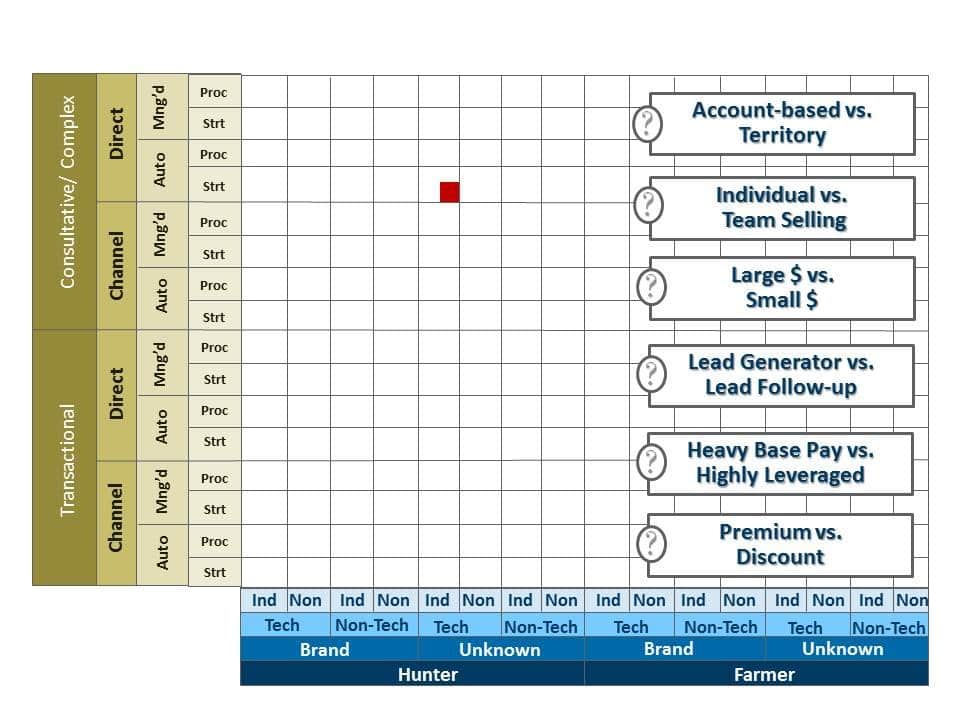
As you work through the questions below, think less about job titles and more about the skills required at each end of the spectrum. Where does your sales role really sit?
As you can see from the graphic, finding your red box, or at least narrowing the role to a general area, is critically important. The clearer you are here, the better your chances of finding someone who will actually be productive in your environment.
Does this sound familiar?
What challenges have you faced in hiring the right salesperson? What strategies have been most effective for you?
If you want a more structured way to think through this and apply it consistently, we’ve laid it out step by step in our sales hiring guide.
In the second installment of this four-part series, I’ll talk about what to do once you’ve determined your needs and how to apply a selection process that truly helps uncover the right candidate.


© Pivotal Advisors, LLC | Privacy Policy