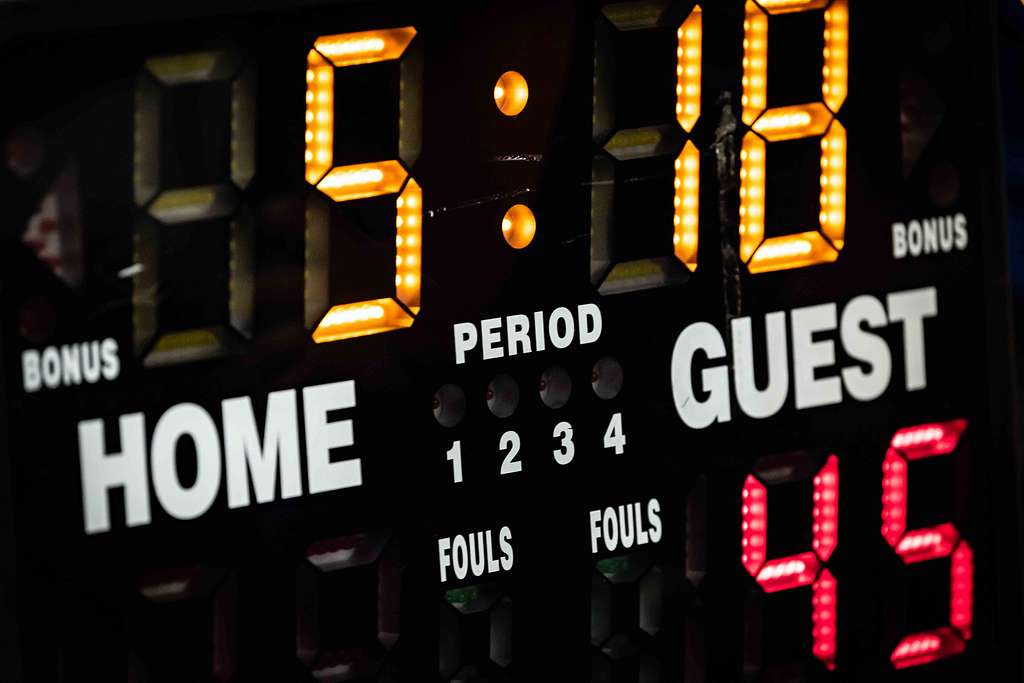
Picture a basketball coach sitting in his office during a game, waiting for someone to slide the stats under the door when it's over. He sees the shooting percentage. The turnovers. Who picked up their fourth foul in the third quarter.
But he never watched the game. He didn't see the bad shot selection, the forced jumpers, the ignored open man. He didn't see the lazy rotations on defense, or the moment in the second half when one player started pressing, and the whole offense unraveled. He has the numbers. He has no idea what actually happened. Nobody would call that coaching.
Sales coaching isn't that different. But too many managers are still in the office when they should be watching the game.
Managers pull the reports. They look at activity, close rates, conversion rates, and pipeline velocity. Then they try to tell their people what to do differently. The problem isn't that the numbers are wrong. It's that numbers tell you something is off. They almost never tell you why.
A rep with a low close rate might have a closing problem. Or they might be running sloppy discovery calls. They might be talking to the wrong people entirely, or leaving meetings without any agreed-upon next step. They might be pitching before they've earned the right to pitch.
Research consistently shows that the quality of sales coaching, not the volume of it, is what drives rep performance. Yet most sales manager coaching conversations are triggered by a dashboard, not by direct observation.
You're not going to find the why in a pipeline report. You find it by listening to the call.
That's where a lot of sales managers get stuck. They try to coach from the CRM and what comes out is vague, recycled feedback.
You need to ask better questions. You need to improve your conversion rate. You need to do better in discovery.
That's not coaching. It's just restating the problem with slightly different words
Real coaching gets specific.
Was the rep prepared, or were they winging it? Did they ask questions that actually uncovered something, or did they do most of the talking? Did they leave with a clear next step?
This is especially important in discovery, where most deals are quietly won or lost before anyone realizes it. Discovery isn't a formality. It's where salespeople need to understand what's actually going on inside the customer's world: the politics, the obstacles, the competing priorities, the real definition of success. Many salespeople miss critical information at this stage simply because no one has ever shown them what a genuinely good discovery conversation looks like.
That's why strong managers stay close to the work. They sit in on calls. They listen to recordings. They debrief while the conversation is still fresh, paying attention not just to outcomes but to behavior:
Then they coach based on what they actually saw and heard. When a manager gives direction based on a number, it can feel abstract and hard to act on. When they say, "In that moment, after the customer mentioned the budget issue, here's what I would have done differently," the rep can grab onto that. They can connect it to a real exchange, a real decision point, a real chance to do it better next time.
Use the scoreboard to know where to look. Then go watch the game.
The managers who develop the strongest sales teams aren't the ones with the best dashboards. They're the ones who stay close to the work, coach from observed behavior, and give feedback that's specific enough to actually change something.
If you want a simple structure for those post-call conversations, our Curbside Check-In Tool gives sales leaders a practical framework for reviewing calls, reinforcing what's working, surfacing missed opportunities, and setting clear expectations going forward.


© Pivotal Advisors, LLC | Privacy Policy